
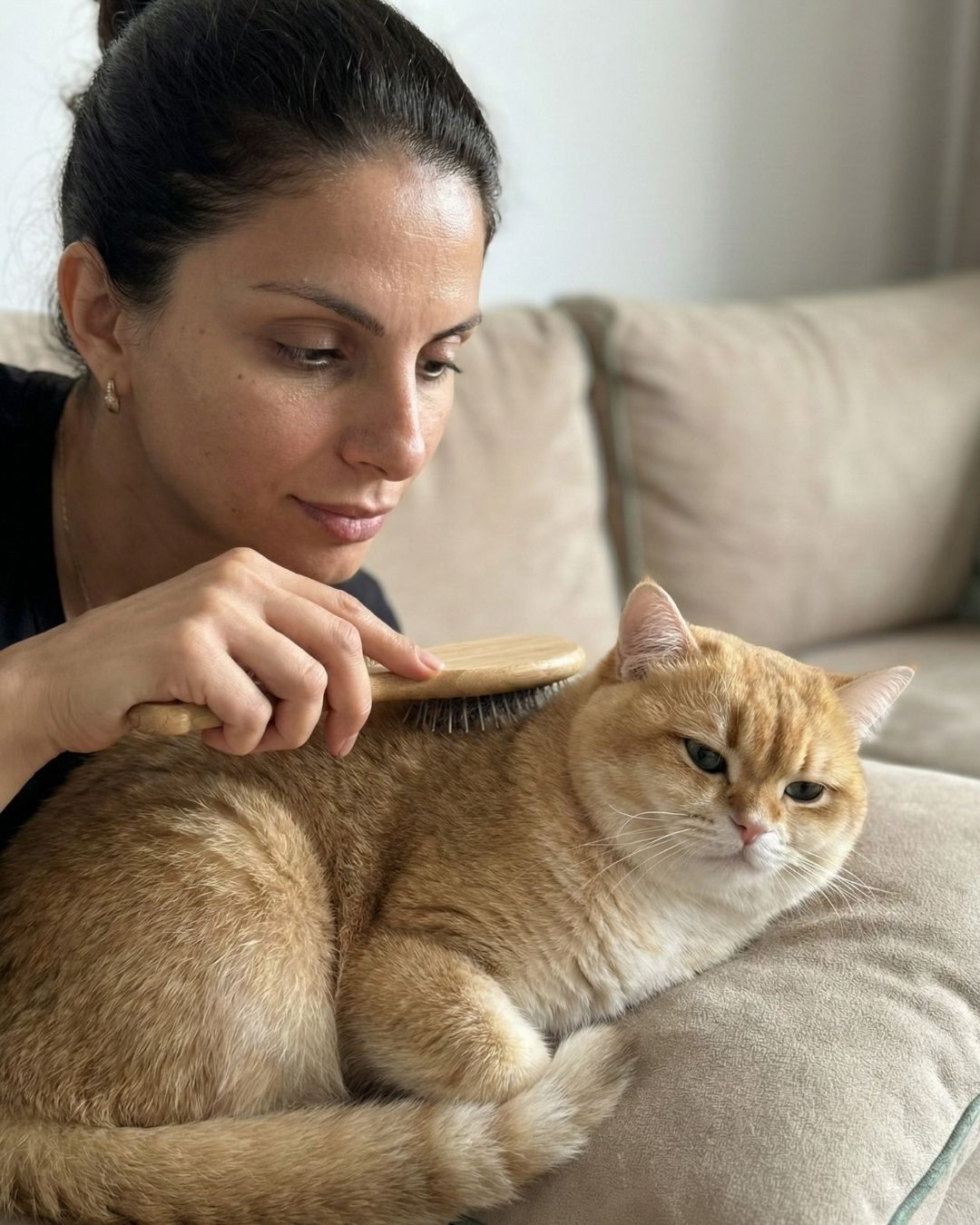
Are British Shorthair Cats Hypoallergenic? The Science-Backed Reality for Every Cat Lover
As the heart and soul behind OzmenCrewCats, I often find myself in a delicate position. A family reaches out, their eyes glowing with the dream of bringing home one of my plush, round-faced British Shorthair kittens, only to whisper the dreaded question: “Are they hypoallergenic? I have allergies.”
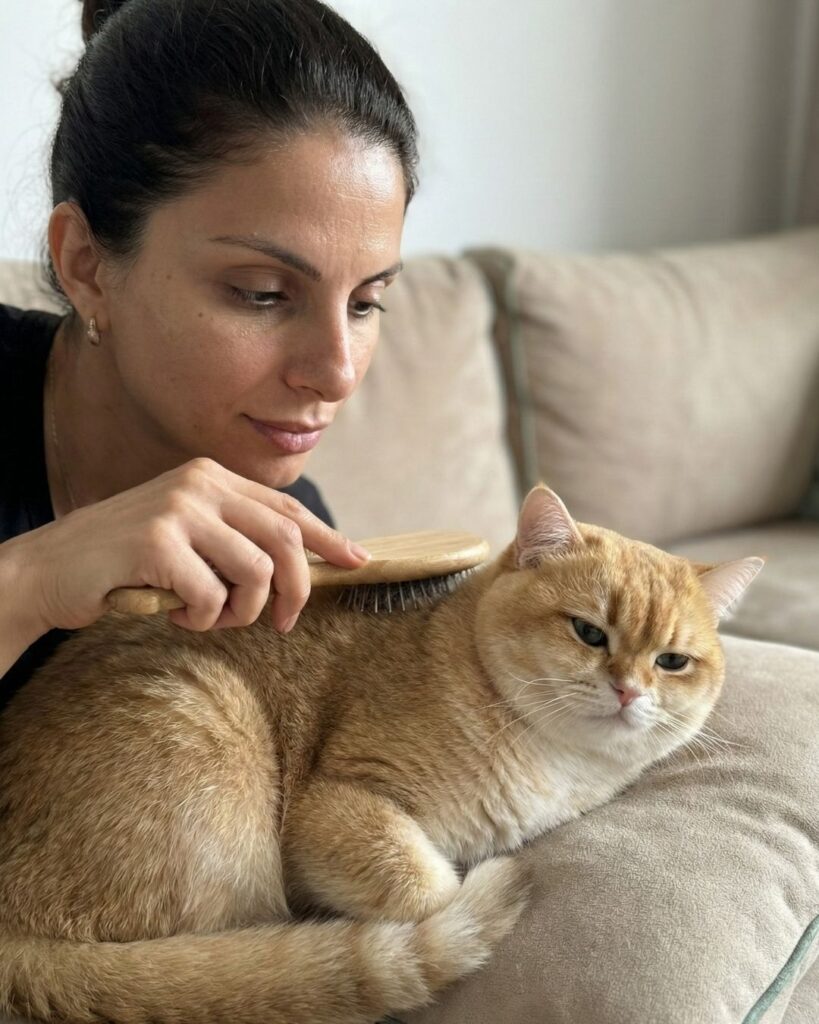
My heart sinks a little, but my (very Virgo) pursuit of perfection demands absolute honesty. If I were a typical salesperson, I might say “yes” just to see a kitten go. But I am a breeder, a protector of this lineage, and a storyteller. The truth is: No, British Shorthairs are not hypoallergenic. However, science—and my years of experience—tell us that the dream is not necessarily over.
The Hidden Villain: It’s Not the Fur, It’s Fel d 1
Most people think they are allergic to cat hair. In reality, the primary culprit is a tiny, sticky protein called Fel d 1. According to research published on PubMed – National Institutes of Health, cat characteristics like sex and age can influence the levels of Fel d 1 found in the home, but all cats produce it to some degree.
This protein is produced primarily in a cat’s salivary and sebaceous (skin) glands. When my British Shorthairs groom themselves—which they do with meticulous pride—they coat their dense, velvety fur in this protein. As the saliva dries, it turns into microscopic dander that floats through your home like an invisible mist. It’s a bit like an invisible perfume, except instead of smelling like roses, it triggers a sneeze!
The British Shorthair Paradox: That Beautiful Double Coat
The British Shorthair possesses a legendary double coat—a dense undercoat protected by slightly crisp outer hairs. While this coat is iconic and gives them that “teddy bear” feel we all love, it acts like a high-end air filter, trapping dander close to the skin. This means that while they might not “shed” as much visible hair as some long-haired breeds, the allergen remains concentrated.
Does color matter? Many ask if my stunning “British Blues” are safer than the goldens or silvers. Scientifically, there is no evidence that coat color influences Fel d 1 levels. A blue kitten is just as likely to trigger a sneeze as a lilac one, but the way we manage that kitten makes all the difference.
A Breakthrough in the Bowl: The IgY Antibody Revolution
One of the most significant breakthroughs in feline science is the use of anti-Fel d 1 IgY antibodies in cat food. Think of it as a proactive shield.
As detailed in this Proof-of-concept study, when a cat eats a diet enriched with these antibodies (derived from eggs), the antibodies bind to the Fel d 1 in the cat’s saliva and neutralize it right there in the mouth. Recent data from the Purina Institute shows that this can reduce active allergens on the cat’s hair and dander by an average of 47% starting in the third week of feeding. This is a game-changer for my clients who want to maintain that close bond without the constant congestion.
My Professional Strategy for Allergy Management
Based on the Environmental Assessment and Exposure Control parameters from the American Academy of Allergy, Asthma & Immunology, I recommend a multi-modal approach for families with mild allergies:
- High-Efficiency Air Filtration: Invest in a HEPA cleaner. Research shows that while standard cleaning helps, HEPA filters are proven to capture microscopic Fel d 1 particles that standard filters miss.
- Strategic Vacuuming: Use a vacuum with a HEPA filter to prevent blowing allergens back into the air. (Believe me, your lungs will thank you!)
- The “Neutralizing Spray” Secret: Advanced biotechnologies, such as those developed by Pacagen , use specialized molecules to neutralize up to 98% of allergens on surfaces where your kitten loves to lounge.

Final Thoughts from OzmenCrewCats
If you are searching for a 100% hypoallergenic cat, the British Shorthair isn’t it. But if you are looking for a breed that is worth the extra effort of a HEPA filter and a specialized diet, you’ve found it.
The bond you will share with a British Shorthair—their quiet companionship, their sturdy presence, and those soulful eyes—is worth every scientific intervention available to us today. As a devoted breeder, I am here to help you navigate this journey safely and ethically. We aren’t just finding you a cat; we are welcoming you into a lifestyle where science meets passion.every scientific intervention available to us today.