
The Complete Natural Cat Food Guide: From Kitten to Adult | Raw Diets & Safety
The Complete Guide to Natural Cat Food: Your Blueprint for Feline Health
Confused by raw diets, kitten schedules, or brand choices? This guide cuts through the noise with science-backed, actionable advice you can use today.
Why “Natural Cat Food” Isn’t Just a Trend: It’s Feline Biology
Cats are obligate carnivores. This isn’t a preference; it’s a biological necessity. Their bodies are designed to thrive on animal protein, specific fats, and nutrients like taurine found only in meat. When we ask “what should i feed my kitten or adult cat?”, we’re really asking how to best meet this evolutionary blueprint. The shift toward natural and raw diets isn’t about pampering—it’s about aligning their food with their physiology for better health, energy, and digestion. For a veterinary perspective, see this primer on raw diets from VCA Hospitals.
Part 1: Kitten Nutrition – Building a Healthy Foundation
Your kitten’s first year sets the stage for its entire life. Getting it right is crucial.
Your Kitten Feeding Schedule Solved
“What times should i feed my kitten?” is a top question. Here’s a clear, age-based plan that works:
- 8-12 Weeks (The Weaned Kitten): Aim for 4 meals a day (e.g., 8 AM, 12 PM, 4 PM, 8 PM). Their stomachs are tiny but need constant fuel. High-quality wet or a moistened high-protein kibble is best.
- 3-6 Months (Rapid Growth Phase): You can reduce to 3 solid meals a day. This is when their personality and appetite explode! Ensure food is rich in DHA for brain development.
- 6-12 Months (The Teenager): Transition to an adult feeding schedule of 2 meals per day. Monitor weight closely to prevent overfeeding. A structured food transition guide is helpful here.
Pro Tip: Always have fresh water available. Kittens on dry food need extra hydration.
Critical Feeding Psychology: Shaping Future Preferences
This period is so critical and vital that cats’ future food preferences or aversions are shaped during this time. At Ozmen Crew Cattery, our experience shows that kittens transitioning from nursing to solid food often have a “let me try this flavor too” approach and accept most flavors they encounter. However, when some kittens show hesitation towards certain tastes, insisting is a fundamental mistake we must highlight. Cats develop a memory against foods they dislike. While they may sometimes test this memory, avoiding stubbornness with your cat is key. Forcing food can create lasting negative associations. For detailed information about feline memory and behavior, read our dedicated article on cat memory.
Choosing The Right Food: Beyond the Hype
When evaluating brands like Diamond Naturals cat food or others, don’t just look at the front label. Turn the bag over.
- First Ingredient: It must be a named animal protein (e.g., “deboned chicken,” “salmon meal”). Avoid foods where corn or wheat is first.
- AAFCO Statement: This is non-negotiable. It must say “formulated to meet the nutritional levels established by the AAFCO Cat Food Nutrient Profiles for [Kitten/Adult].” This is your baseline safety guarantee.
- Look for Specifics: Probiotics (like in Diamond Naturals), named fat sources (chicken fat, salmon oil), and whole foods are pluses. Check detailed brand reviews for insights.
Part 2: The Raw & Natural Diet Deep Dive
Moving beyond processed kibble? Understanding raw is key.
⚠️ Safety First: The Non-Negotiables of Raw Feeding
Raw diets carry real risks (bacteria like Salmonella, nutritional imbalance). Mitigate them:
- Don’t Wing It: Feeding only chicken breast is dangerous. Cats need organs, bone, and specific supplements.
- Consider Commercial Raw: Brands like Northwest Naturals cat food or Feline Natural use High-Pressure Processing (HPP) to kill pathogens while keeping nutrients intact. This is the safest entry point.
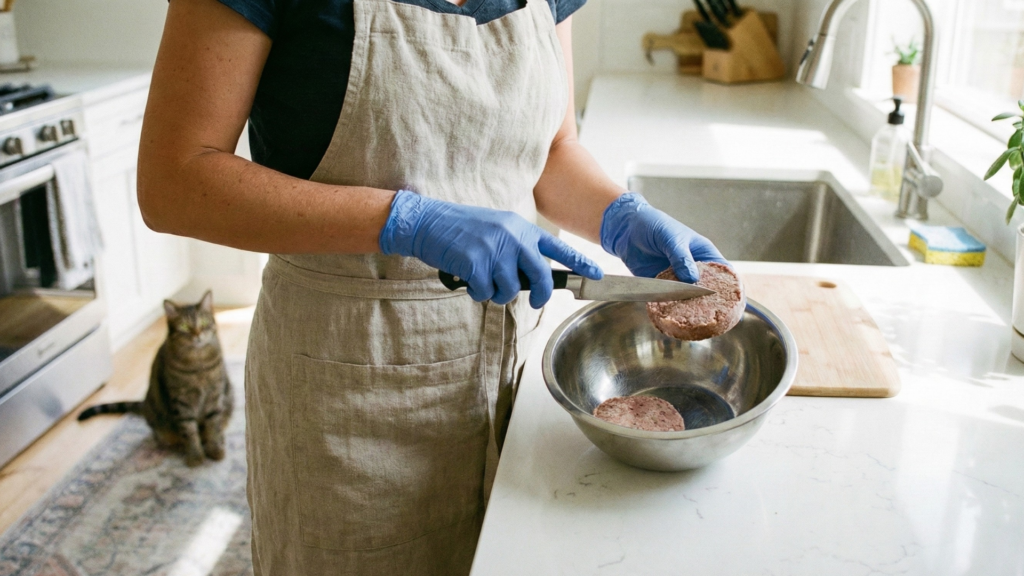
- Hygiene is Paramount: Handle raw food like human-grade meat. Clean bowls, surfaces, and hands thoroughly.
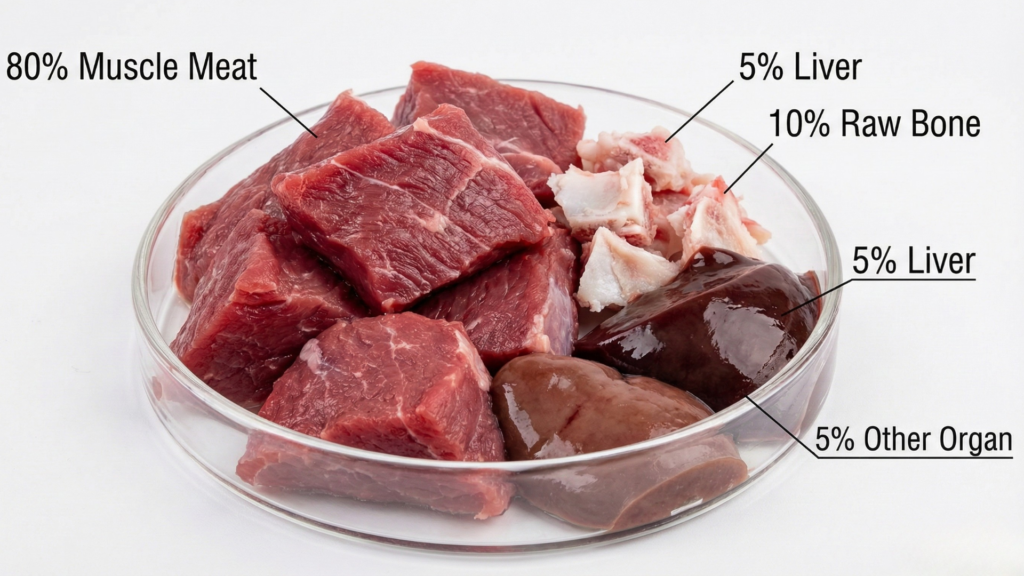
The Balanced Raw Meal: The 80/10/5/5 Rule (Simplified)
For those exploring homemade, this is the gold standard ratio:
- 80% Muscle Meat: Chicken thigh, beef, rabbit, turkey (provides protein).
- 10% Raw Edible Bone: Ground chicken necks or wings (for calcium). Never cooked bone.
- 5% Liver: Non-negotiable source of Vitamin A.
- 5% Other Secreting Organs: Kidney, spleen, etc.
- Plus Supplements: Taurine, fish oil, vitamin E. This is why pre-made blends are easier and safer.
Commercial raw foods like Northwest Naturals are formulated to this standard, taking the guesswork out.
Brand Spotlight: Is Natural Balance a Good Cat Food?
This is a common search for a reason. Natural Balance offers a wide range, including limited-ingredient diets good for cats with sensitivities. Verdict: It’s a solid, reputable brand that uses quality ingredients and has strong AAFCO compliance. It may not be as protein-centric as some premium raw brands, but it’s a reliable choice for a high-quality commercial diet, especially for cats with allergies. Always check the specific formula’s first ingredients.
Part 3: Execution – How to Transition and Thrive
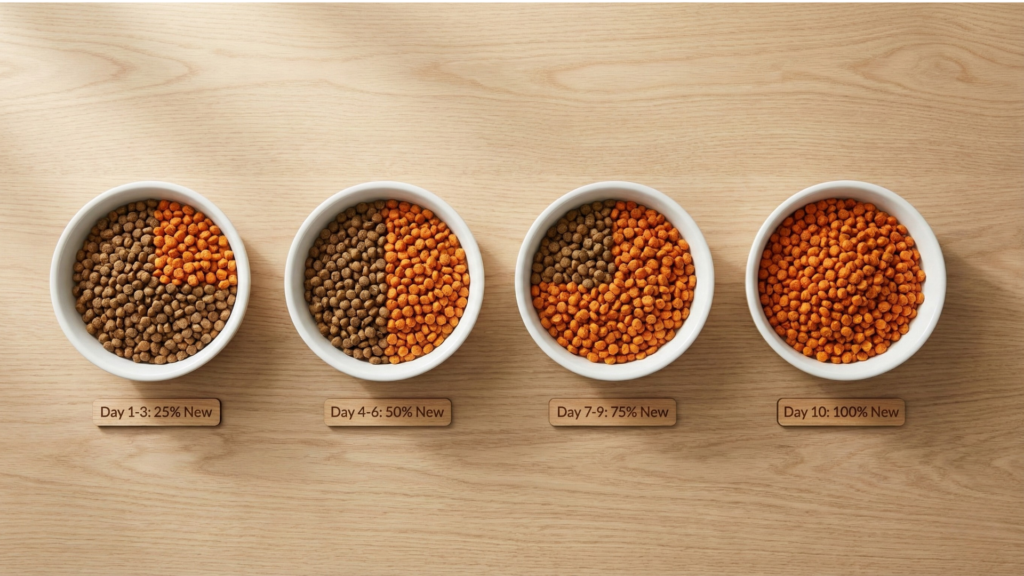
The Stress-Free Food Transition: A 10-Day Plan
Switching food too fast causes upset stomachs. Follow this slow blend method:
| Day | New Food | Old Food | Notes |
|---|---|---|---|
| 1-3 | 25% | 75% | Mix thoroughly. |
| 4-6 | 50% | 50% | Monitor stool consistency. |
| 7-9 | 75% | 25% | Almost there! |
| 10 | 100% | 0% | Full transition complete. |
For more tips, Royal Canin’s guide offers excellent advice.
Essential Food Safety Update (2024-2025)
Stay informed. There have been recalls linked to pathogens like H5N1 in raw poultry. This doesn’t mean you should avoid raw; it means you must choose brands with impeccable safety protocols.
- Choose HPP-Treated Brands: This is your best safety net.
- Stay Updated: Bookmark the Northwest Naturals Recall FAQ or the Dog Food Advisor Recall List (covers cat food too).
- Diversify Proteins: Don’t feed only one meat source (e.g., only chicken). Rotate proteins to reduce risk and provide a broader nutrient profile.
Your Clear Path Forward
Feeding your cat doesn’t have to be confusing. Here’s your actionable takeaway:
- For Kittens: Focus on frequent, protein-rich meals and a smooth transition to adult food. Remember that positive early experiences shape lifelong preferences.
- For Adult Cats: Prioritize animal protein and moisture. High-quality wet food or commercial raw (like Northwest Naturals or Feline Natural) are top choices.
- For Safety & Simplicity: A premium commercial diet like Diamond Naturals or Natural Balance, possibly supplemented with occasional freeze-dried raw toppers, is a winning, low-risk strategy for most owners.
The goal isn’t dietary perfection—it’s informed, conscious choices that dramatically boost your cat’s well-being. You’ve got this.